I Wasn't Planning This
I had three egg whites sitting in my fridge. Leftover from a custard I made for no good reason. They stared at me every time I opened the door.
I hate wasting food. But I also hate meringue that tastes like sweetened air. That whole "cloud on a plate" thing never did it for me.
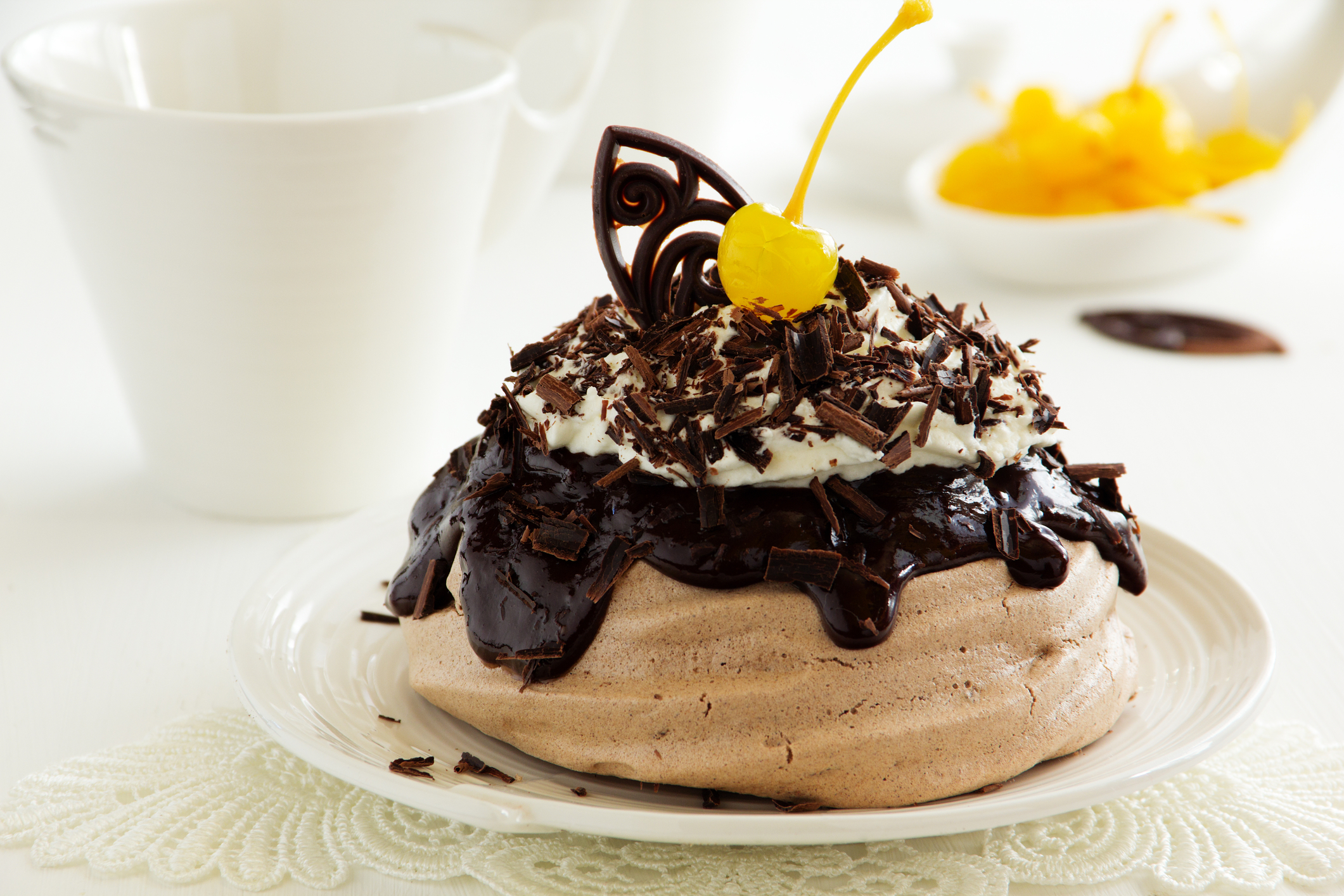
So I started playing around. What if I treated a pavlova more like a chocolate cake? What if it had actual structure? Something you could sink a fork into without it collapsing into a puddle of sugar water.
This is that experiment. And it worked better than I expected.
Why This Works
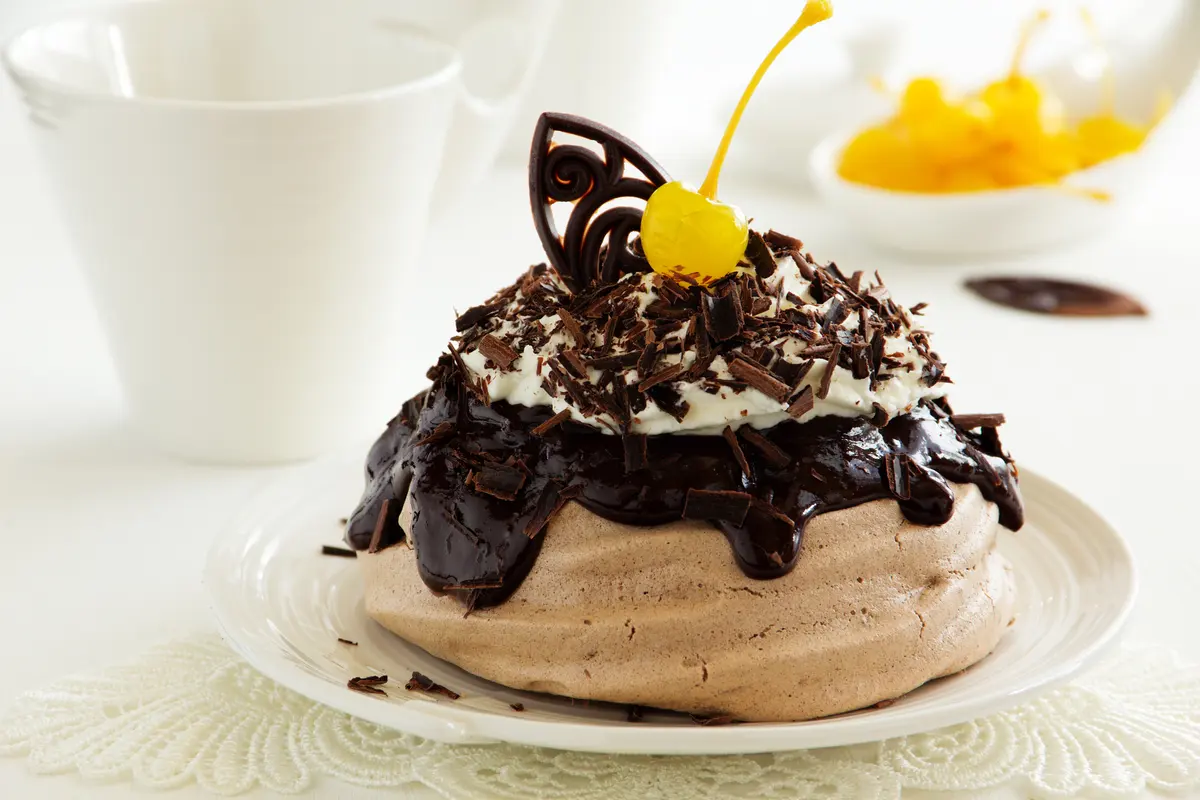
The meringue is the surprise here. It's crispy on the outside. Chewy in the center. Not that fragile stuff that shatters when you look at it.
A little cocoa powder in the meringue does two things. It gives the whole thing a chocolate undertone that doesn't hit you over the head. And it helps stabilize the egg whites just enough so they hold their shape.
The vinegar and cornstarch are doing the heavy lifting too. I honestly don't understand the chemistry completely. But I know that without them, you get a flat disc instead of a pavlova.
What You Need
The egg whites have to be room temperature. I know, I know. Everyone says that. But it matters here more than most places because you need maximum volume. Cold whites take forever to whip and never get as fluffy.
Superfine sugar dissolves faster. If you only have regular granulated, run it through the food processor for 30 seconds. Or just use it anyway. The texture will be slightly grainier but nobody will complain after the first bite.
Dark chocolate for the drizzle. Not milk chocolate. Not semi-sweet. Dark. Around 60-70% cocoa. It cuts through the sweetness of the meringue.
Fresh berries are optional. I usually do raspberries and blackberries because they're tart. But strawberries work. Even frozen ones if you thaw and drain them first.
The One Thing That Can Go Wrong
Egg whites that won't whip. You beat them and beat them and they stay runny. That's almost always a tiny bit of yolk or grease in the bowl.
Wipe your bowl and beaters with lemon juice or white vinegar before starting. Don't use a plastic bowl. It holds onto grease no matter how well you wash it. Glass or metal only.
If your whites still won't cooperate, start over. It's annoying. But a pavlova with flat meringue is not worth serving.
Putting It Together
Preheat the oven to 300°F. Line a baking sheet with parchment. Draw a 9-inch circle on it if you want your pavlova to be round. I just freehand it and call it rustic.
Beat the egg whites on medium speed until they look foamy and start to hold soft peaks. This takes about 3-4 minutes. Don't rush it.
Start adding the sugar one tablespoon at a time. Yes, one at a time. If you dump it all in at once, the whites will deflate. Keep beating on medium-high until the mixture is glossy and stiff. It should look like marshmallow fluff. The sugar should be fully dissolved. Rub a little between your fingers. If it feels gritty, keep beating.
Fold in the cornstarch, cocoa powder, vanilla, and vinegar. Use a rubber spatula. Be gentle. A few streaks are fine. You just don't want to deflate all the air you worked for.
Spread the meringue into your circle on the parchment. Make the edges a little higher than the center. This creates a nest for the cream later.
Bake for 1 hour 15 minutes. The outside should be firm and dry. The center should still feel slightly soft when you press it gently. Turn off the oven and leave the pavlova inside with the door cracked for at least 30 minutes. This prevents cracking from temperature shock.
Cool completely on the baking sheet. Then transfer to a serving plate. Be careful. It's fragile at this stage.
The Chocolate Part
Melt the dark chocolate in a double boiler or microwave. If using the microwave, do 30-second intervals and stir each time. It's easy to burn chocolate when you're in a hurry.
Let it cool slightly while you make the cream. Not completely. You want it warm enough to drizzle but not hot enough to melt the cream.
Whip the heavy cream with powdered sugar until soft peaks form. Don't go too far. Stiff cream is fine, but it's harder to spread. You want it smooth and pillowy.
Spread the cream over the cooled pavlova. Go all the way to the edges. Don't worry about being neat. The messiness is part of the charm.
Drizzle the melted chocolate over the cream. Use a spoon or a piping bag. I just drizzle with a spoon and let it fall where it wants.
Dust with cocoa powder. Not too much. Just enough to see it.
How to Serve It
This is not a make-ahead dessert. The meringue starts to soften as soon as the cream hits it. That's fine for the first few hours. You get that crispy-tender contrast that makes pavlova special.
But by the next day, it's more like a soft meringue cake. Which is also good. Just different. So if you have leftovers, call it chocolate cake pavlova pudding and nobody will argue.
Serve it within 2 hours of assembling. Add the berries right before you bring it to the table. They'll stay bright and fresh that way.
A slice of this with a cup of strong coffee is the kind of afternoon that makes you forget you're supposed to be doing something else.
A Few Notes
This works for 8-10 people if you cut small slices. Which you should. It's rich. One small wedge is plenty.
If you're serving a crowd that loves sweet things, double the recipe and make two pavlovas. Don't try to make one giant one. The baking time gets unpredictable.
I've made this for birthdays, dinner parties, and Tuesday nights when I wanted something that felt special. It always gets the same reaction. People look at it. Take a bite. Look at it again.
Then they ask for the recipe.
Rich Chocolate Cake Pavlova with Crispy Meringue
Ingredients
- 4 large egg whites, room temperature
- 1 cup superfine sugar
- 1 tablespoon cornstarch
- 1 tablespoon unsweetened cocoa powder
- 1 teaspoon vanilla extract
- 1 teaspoon white vinegar
- 200g dark chocolate, chopped
- 300ml heavy cream
- 2 tablespoons powdered sugar
- 1 tablespoon cocoa powder for dusting
- Fresh berries for garnish
Instructions
- 1Preheat oven to 300°F (150°C). Line baking sheet with parchment paper.
- 2Beat egg whites until soft peaks form using an electric mixer.
- 3Gradually add superfine sugar while beating until stiff, glossy peaks form.
- 4Fold in cornstarch, cocoa powder, vanilla extract, and vinegar gently.
- 5Spread mixture into 9-inch circle on prepared baking sheet, creating a slight depression in center.
- 6Bake for 1 hour 15 minutes until crisp outside but slightly soft inside.
- 7Cool completely on baking sheet, then transfer to serving plate.
- 8Melt chocolate in double boiler or microwave in 30-second intervals, stirring frequently.
- 9Whip heavy cream with powdered sugar until soft peaks form.
- 10Spread whipped cream over cooled pavlova base.
- 11Drizzle melted chocolate over cream layer.
- 12Dust with cocoa powder and arrange fresh berries on top.
- 13Serve immediately or refrigerate up to 2 hours before serving.