
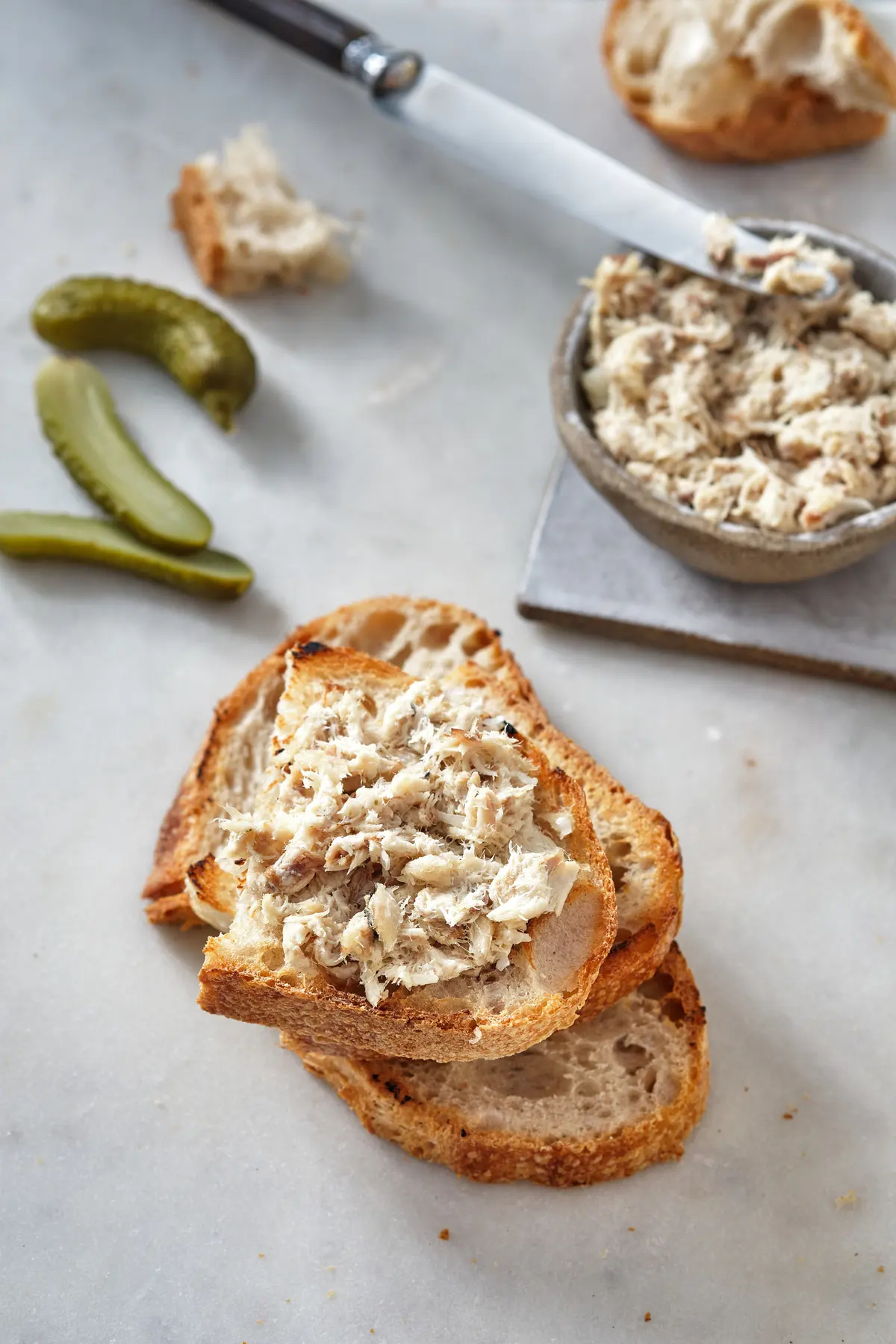
The First Time Felt Wrong
I was skeptical the whole first time.
Mackerel has that reputation. Oily. Strong. The kind of fish you brace yourself for.
But I had two packs of smoked mackerel from a bulk shop run and no plan. I figured I'd mash it up with some butter and call it lunch. If it was bad, I had backup toast.
It wasn't bad.
My husband ate three pieces standing at the counter while I was trying to plate. My daughter, who announces "I don't like fish" at least once a week, ate two.
I didn't say a word. I just watched.
Now I make this whenever I need something that looks like I planned ahead but took fifteen minutes. The lemon wedges on the plate do a lot of heavy lifting for presentation.
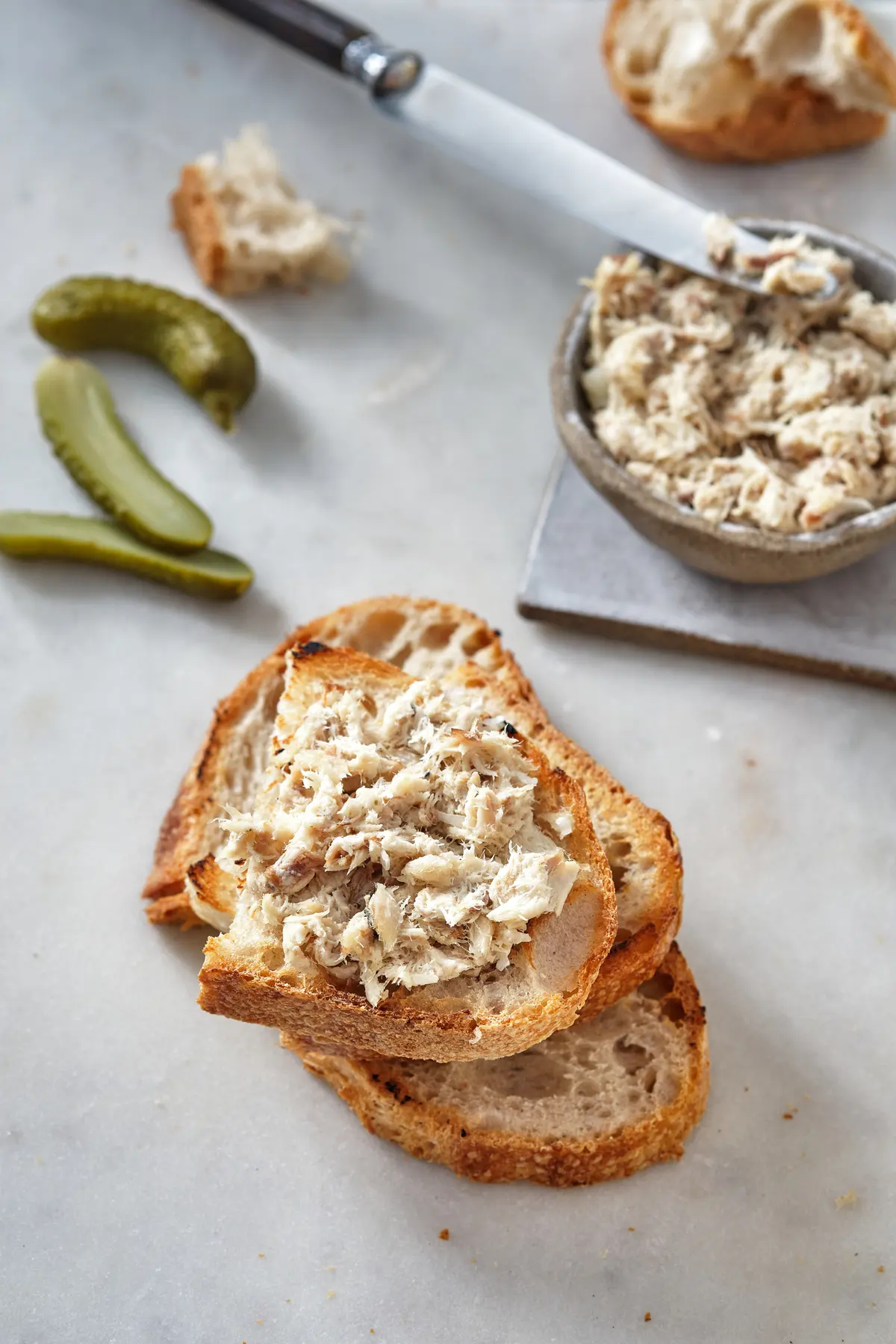
What It Actually Is
Rillette sounds fancy. It's French. It's pronounced ree-yet, and you can pretend you knew that.
But really it's just shredded or flaked protein bound with fat into a spreadable paste. Usually pork. Sometimes duck. But mackerel works better because it's already got that fatty richness that doesn't need as much extra butter.
This one leans more pâté than traditional riyette. The cream makes it smooth rather than stringy, and that's what I prefer. If you want it chunkier, just flake the fish into bigger pieces and skip the cream.
I've made it both ways and I keep coming back to this version. The cream seems wrong but it's what makes it feel like actual food instead of just fish butter.
A Few Notes
Smoked mackerel. Get the hot-smoked kind, not the cold-smoked. Cold-smoked mackerel is more like lox and it won't flake right. Hot-smoked comes in vacuum packs usually near the seafood counter. I've seen it at regular grocery stores and it's rarely more than $5 a pack.
Butter. You need it softened. I always forget this. If you're me, microwave it for five seconds at a time, flipping the stick halfway through. Stop before it melts. Melted butter will make the riyette greasy instead of creamy.
Shallots. You can skip them but don't. The raw onion bite needs to cook out slightly. If you don't have shallots, use a quarter of a small red onion, finely minced. Just cook it two minutes longer.
Cayenne. 1/4 teaspoon is mild. If you want heat, bump it to 1/2. My husband adds extra on his toast like it's a seasoning challenge.
Cream. Use heavy cream or double cream. Half and half will be too thin and the texture will turn gluey. I don't know why. It just does.
Putting It Together
Start with the shallots. Melt one tablespoon of butter in a small pan, cook the shallots on medium heat until they go translucent. Three minutes max. You don't want color on them, just softness.
While that happens, skin the mackerel. The skin peels off easily with your fingers once you get under an edge. I usually run the fillets under cold water first to loosen it. Then pat them dry with paper towels.
Flake the fish into a mixing bowl. Run your fingers through the flakes to find any stray bones. Smoked mackerel usually has the pin bones removed but sometimes one or two sneak through. My daughter found one once and I had to do a dramatic "see, I'm checking" routine for the next three batches.
Dump the cooked shallots into the bowl. Add the rest of the butter, lemon juice, Dijon, cayenne, salt, and pepper. Mush it together with a fork until it starts looking like a chunky paste.
Add the cream. Fold it in until the whole thing looks cohesive. Don't overmix or it'll get pasty. Just fold until you don't see streaks of cream anymore.
Taste it. This is the step everyone skips. Dip a clean finger or a knife. You want enough salt to wake up the fish, enough lemon to cut the richness. If it tastes flat, add another squeeze of lemon. If it tastes greasy, add a pinch of salt. Do not skip tasting.
Stir in the parsley last.
The Bread Situation
This spread needs good bread. Not the soft sandwich kind. A crusty baguette or a thick slice of sourdough.
Brush both sides with olive oil. Lightly. You're not frying it, you're toasting it with a little fat for color.
Toast in a pan over medium heat or in a 200°C oven. Pan method is faster but you have to watch it. Oven method is hands-off. I use the pan because I forget about things in the oven and my smoke alarm is aggressive.
Three to four minutes per side. You want it golden and crisp enough that the riyette doesn't make it soggy immediately. A thick spread will soften the toast anyway, but good toast holds up for the first two minutes of eating.
Spread it on warm. Not hot from the pan, but still warm enough that the butter starts to melt slightly into the bread. That's the moment.
One Thing Than Can Go Wrong
Too much cream.
I did this once. I was distracted, added an extra tablespoon because I thought "more cream = better." It made the whole thing loose and runny. It wouldn't stay on the toast. It slid off in a disappointing pale smear.
Fix: add a little more flaked mackerel to tighten it up. Or smash in an extra pat of butter to thicken the fat ratio. Or just admit you made mackerel dip instead of riyette and serve it with crackers. Nobody will complain about mackerel dip.
Another thing: cold butter. If your butter is hard, the mixture will be lumpy. The lumps will look like unmixed cream cheese in an otherwise smooth paste. They're edible but not pretty. Let the butter sit on the counter for an hour before you start. Or do the microwave trick. I won't judge.
How to Serve It
This is an any-time thing, but it's best as a first course or a light lunch.
Plate the toasts with a lemon wedge on the side. Everyone wants to squeeze lemon over the first bite. It cuts the richness in a way that feels intentional. I squeeze mine, my husband squeezes his, even my daughter squeezes hers and then makes a sour face. It's a ritual now.
A handful of arugula on the plate looks nice. A few cornichons if you have them. Pickled red onions if you made a jar last week.
You can also serve it in a jar as a spread on a cheese board. It's one of those things that seems like you bought it from a fancy shop but you actually made it that morning.
Leftovers keep for three days in the fridge. The texture gets slightly denser as it chills, so let it sit at room temperature for ten minutes before spreading. Or don't, and just eat it cold. I've done both.
Why I Keep Making It
It's fast. It's cheap. It makes me look like I have my life together.
But honestly, I make it because it's the one thing in my kitchen that feels like a secret. People don't expect mackerel to be good in a spread. They expect it to be an ingredient they avoid. And then I set this down on the table and watch them stop talking for a second while they chew.
That pause is worth the ten minutes.
And the butter melting into the toast. Also worth it.
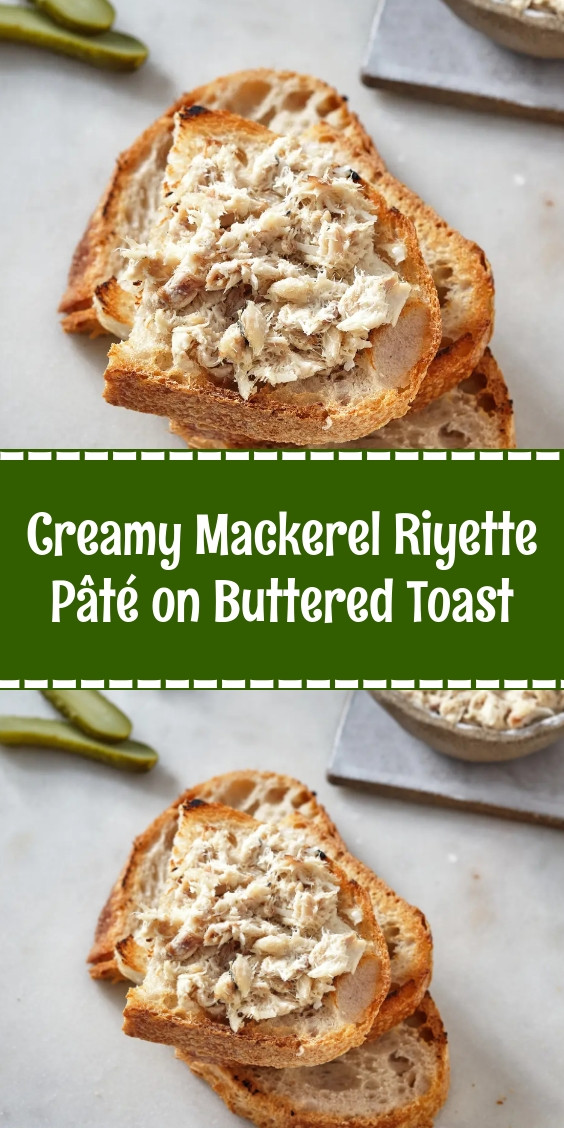
Creamy Mackerel Riyette Pâté on Buttered Toast
Ingredients
- 400g smoked mackerel fillets, skinned and boned
- 100g unsalted butter, softened
- 2 shallots, finely minced
- 1 tbsp fresh lemon juice
- 1 tsp Dijon mustard
- 1/4 tsp cayenne pepper
- Salt and freshly ground black pepper to taste
- 2 tbsp heavy cream
- 1 tbsp fresh parsley, chopped
- 8-10 slices crusty bread or baguette
- 2 tbsp olive oil for toasting
- Lemon wedges for serving
Instructions
- 1Flake the smoked mackerel into a bowl, carefully removing any remaining small bones.
- 2Heat 1 tbsp butter in a small pan over medium heat and gently cook the minced shallots for 2-3 minutes until softened.
- 3Add the cooked shallots to the mackerel and combine with remaining softened butter.
- 4Mix in lemon juice, Dijon mustard, cayenne pepper, salt, and black pepper.
- 5Fold in the heavy cream until the mixture reaches a smooth paste consistency.
- 6Stir in fresh chopped parsley.
- 7Taste and adjust seasonings as needed.
- 8Brush bread slices lightly with olive oil on both sides.
- 9Toast the bread in a hot pan or oven at 200°C for 3-4 minutes per side until golden and crispy.
- 10Spread the mackerel riyette generously onto warm toasted bread.
- 11Serve immediately with lemon wedges and extra parsley garnish if desired.